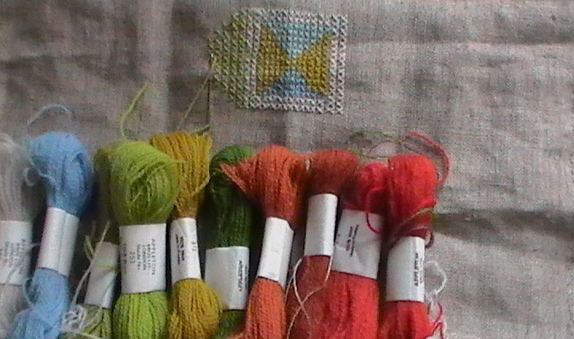

Rolling on……

Stitching Alone and with Others


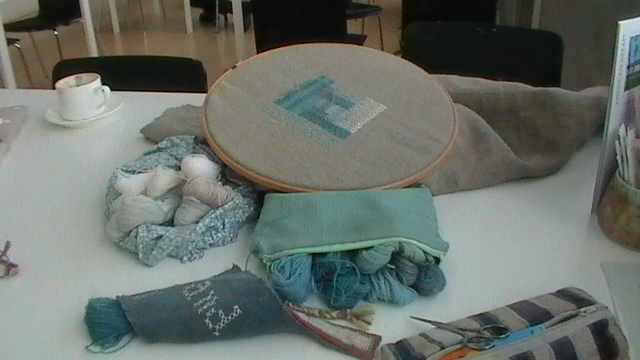
I am feeling so blessed!!
Roughly 20 people have sent me their addressee or my lovely local people get them hand delivered!!!!
Looking forward to more responses!!
I am planning end of April a “Coffee/Cake and Stitch” event, (time and place to be confirmed) were all the Stitch sampler will there and all the local Stitchers! More info will follow!!
I am off now to my currently favored Cafe in town, the Lost and Found Cafe,
In Chapel Street, Penzance, for a bit of stitching!
More soon and keep me posted!!!!!


Right now I am sending out the ‘Stitch Kits” (or hand deliver around Penzance),
for those who are going to take part in the event “Time and Stitch”.
A Live event will follow in May, more details nearer to the time!


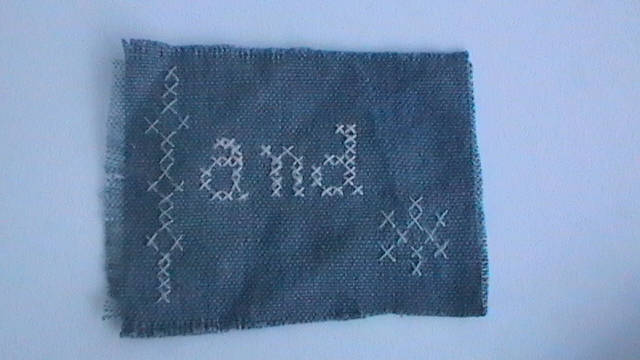 Will you share some of your time with me?? When I stitch/embroider I feel time widens, deepens, is expanding. I would like to know how You experience a moment or a few more (as much or as little as you like!) of stitching/embroidering. I would like to invite you to take part in my Project “Stitch and Time”. Send me an email over the messages or an email to: christiane.berghoff@gmail.com. If you would like to take part, then please send me your address and I will send you a postcard with a piece of fabric, a little bobbin with embroidery wool and a needle. So you will have all you need to get stitching (ok you provide the scissors), what you stitch and how much is entirely up you! I would like you to write on the back of the card how long it took you to embroider and how it felt! how we experience time and sharing the experience with other people! |


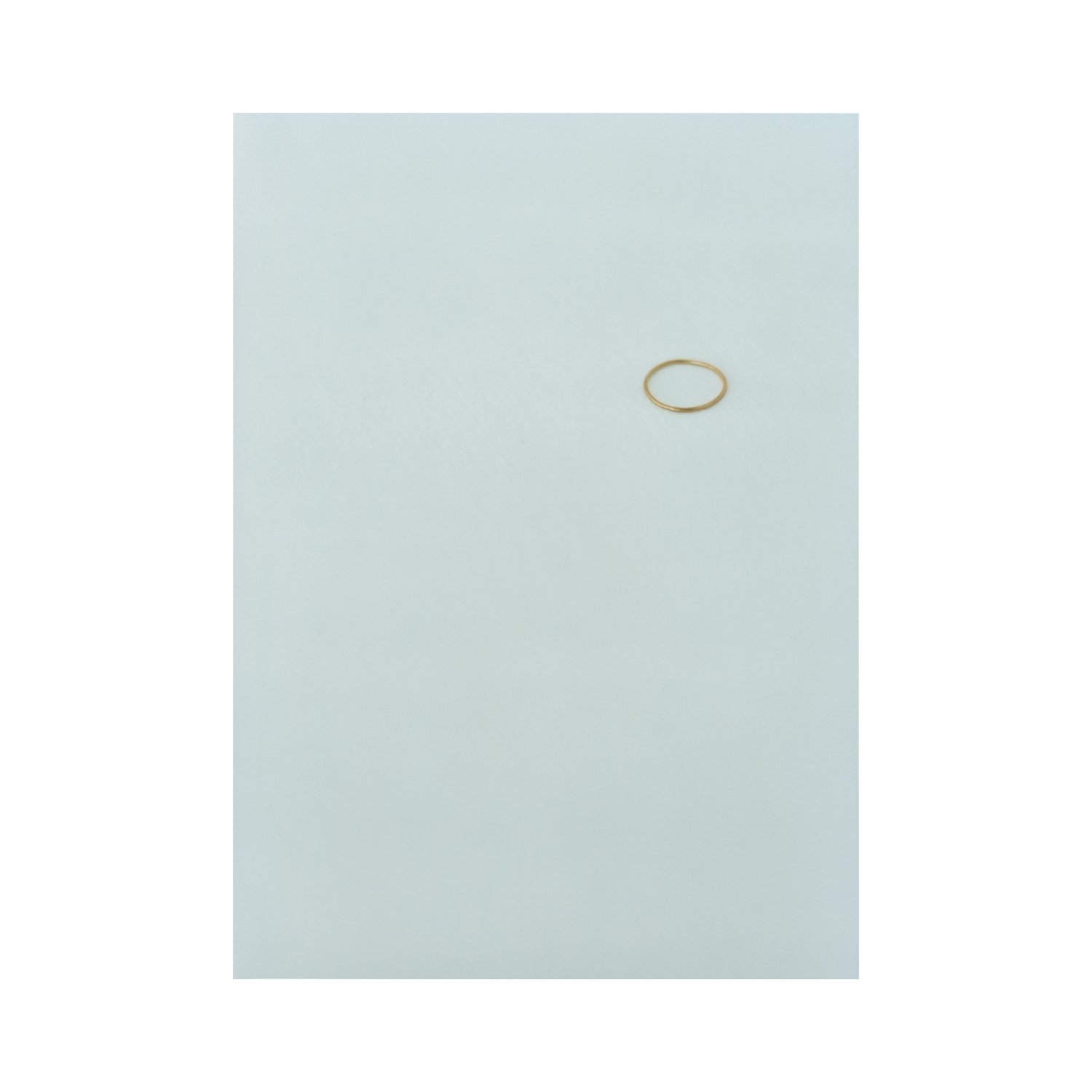
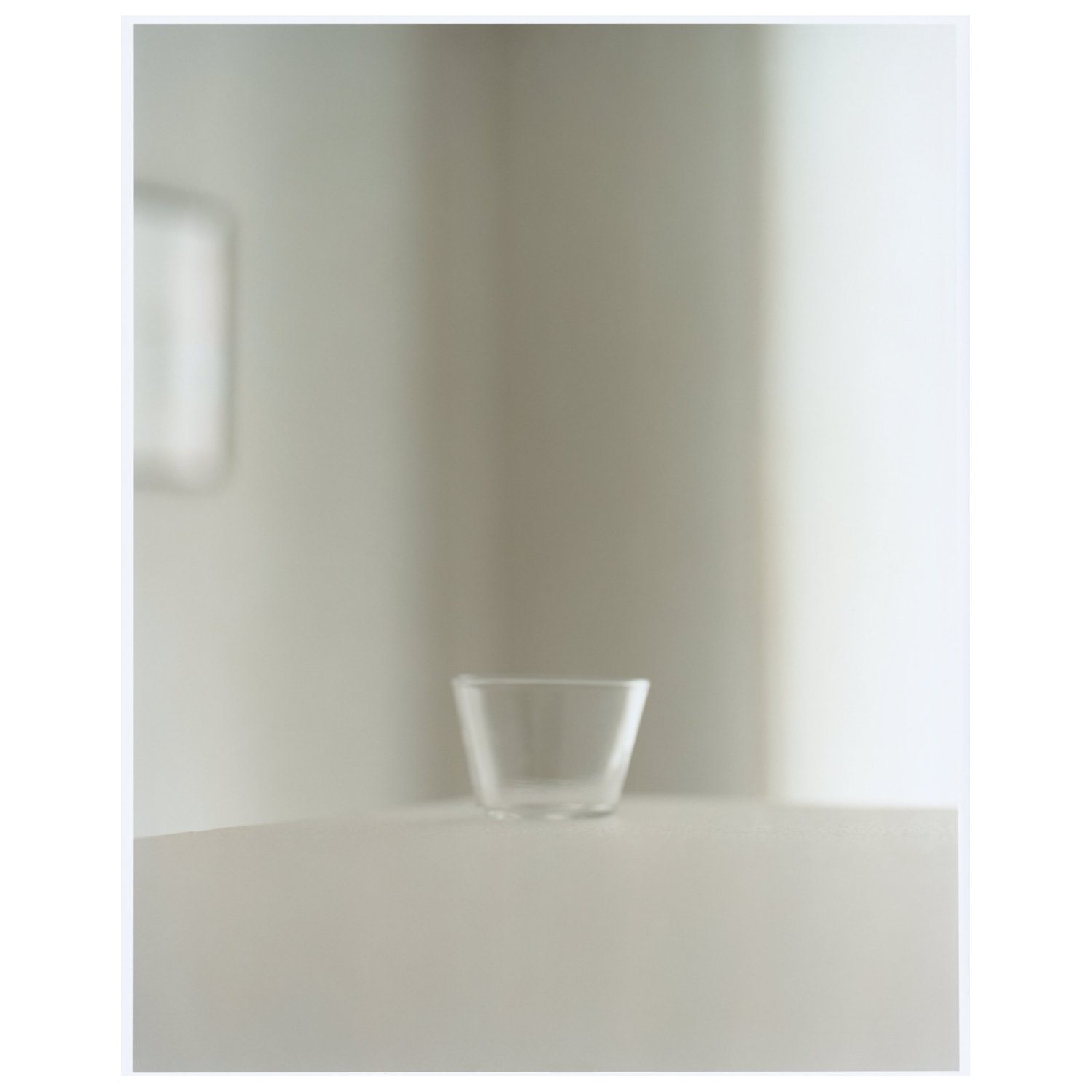
The book “New Standard Craft” about Japanese contemporary craft, embedded in a specific ethic and aesthetic context (simplicity as a value in time were “less” is “more”‘) was and is still my major inspiration behind my work. At the beginning it was the simplicity of the image and the paired down aesthetic of the objects. To me it has a link to William Morris quotation:
“Have nothing in your house that you do not know to useful, or believe to be beautiful ” William Morris
Also the essays in this book give an insight into the thinking of the designers involved (more reading and extracting of content to follow)

The following images are from the book “NEW STANDARD CRAFT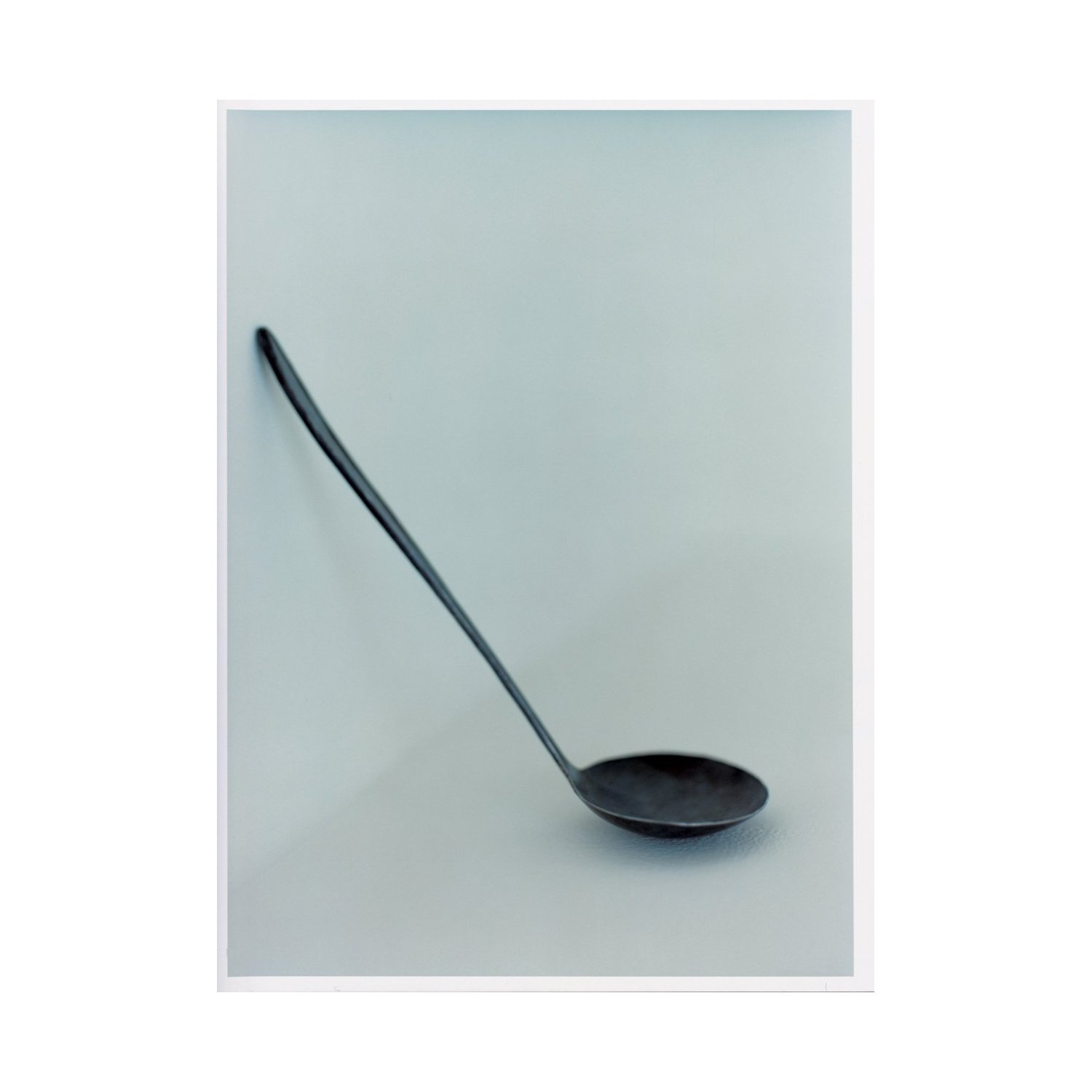
‘
Today in the library I “found” the book about Wabi-Sabi. I remember someone talking about it and it is just what I have been looking for! To me it appears to be the aesthetic philosophy linked to Buddhism and Japanese Crafts aesthetic.

Zen garden of Ryōan-ji. It was built during the Higashiyama period

A Japanese tea house which reflects the wabi-sabi aesthetic in Kenroku-en (兼六園) Garden

Wabi-sabi tea bowl, Azuchi-Momoyama period, 16th century
Wabi-sabi (侘寂) represents a comprehensive Japanese world view or aesthetic centered on the acceptance of transience and imperfection. The aesthetic is sometimes described as one of beauty that is “imperfect, impermanent, and incomplete”. It is a concept derived from the Buddhist teaching of the three marks of existence (三法印 sanbōin), specifically impermanence (無常 mujō), the other two being suffering (苦 ku) and emptiness or absence of self-nature (空 kū).
Characteristics of the wabi-sabi aesthetic include asymmetry,asperity (roughness or irregularity), simplicity, economy, austerity, modesty, intimacy and appreciation of the ingenuous integrity of natural objects and processes.
“Wabi-sabi is the most conspicuous and characteristic feature of traditional Japanese beauty and it occupies roughly the same position in the Japanese pantheon of aesthetic values as do theGreek ideals of beauty and perfection in the West.” “if an object or expression can bring about, within us, a sense of serene melancholy and a spiritual longing, then that object could be said to be wabi-sabi.” “[Wabi-sabi] nurtures all that is authentic by acknowledging three simple realities: nothing lasts, nothing is finished, and nothing is perfect.”


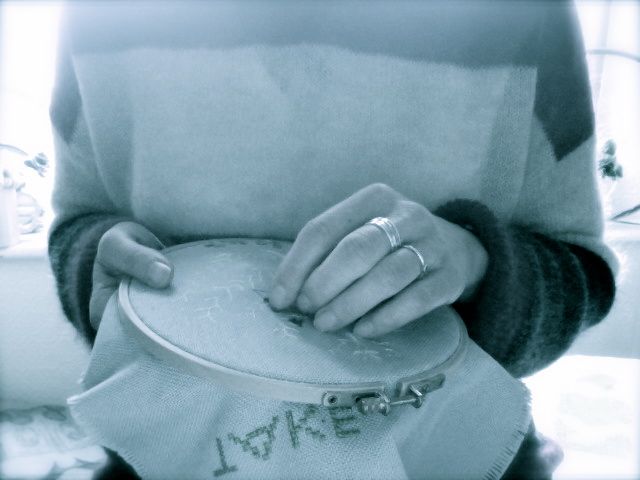
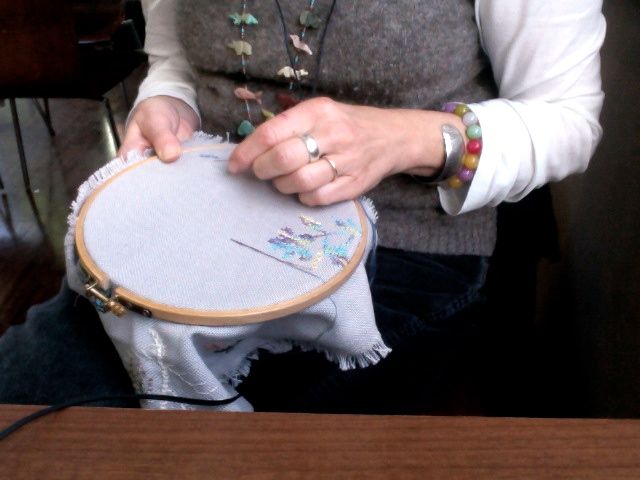
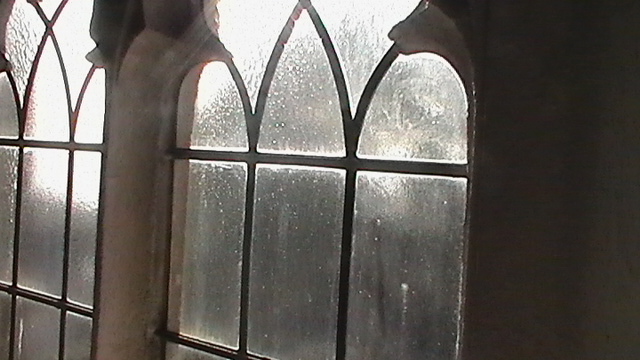
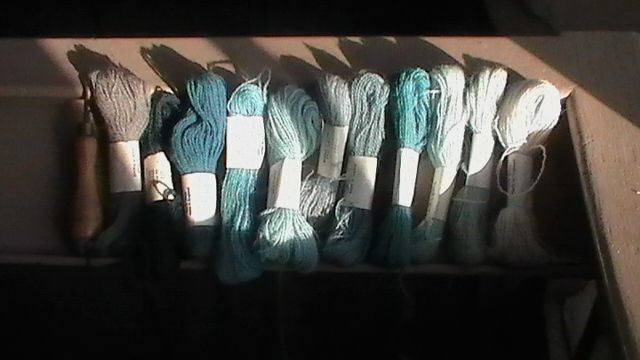
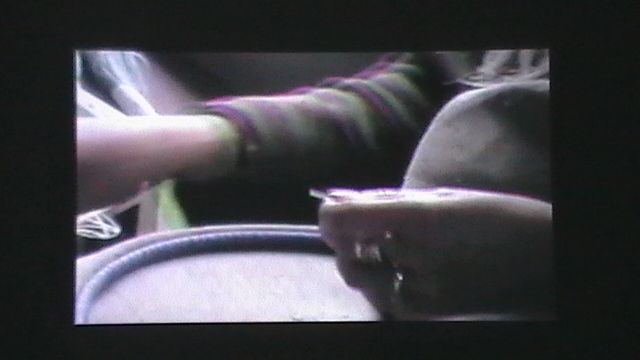

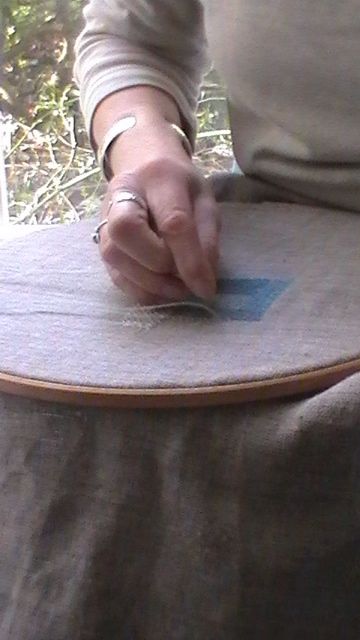
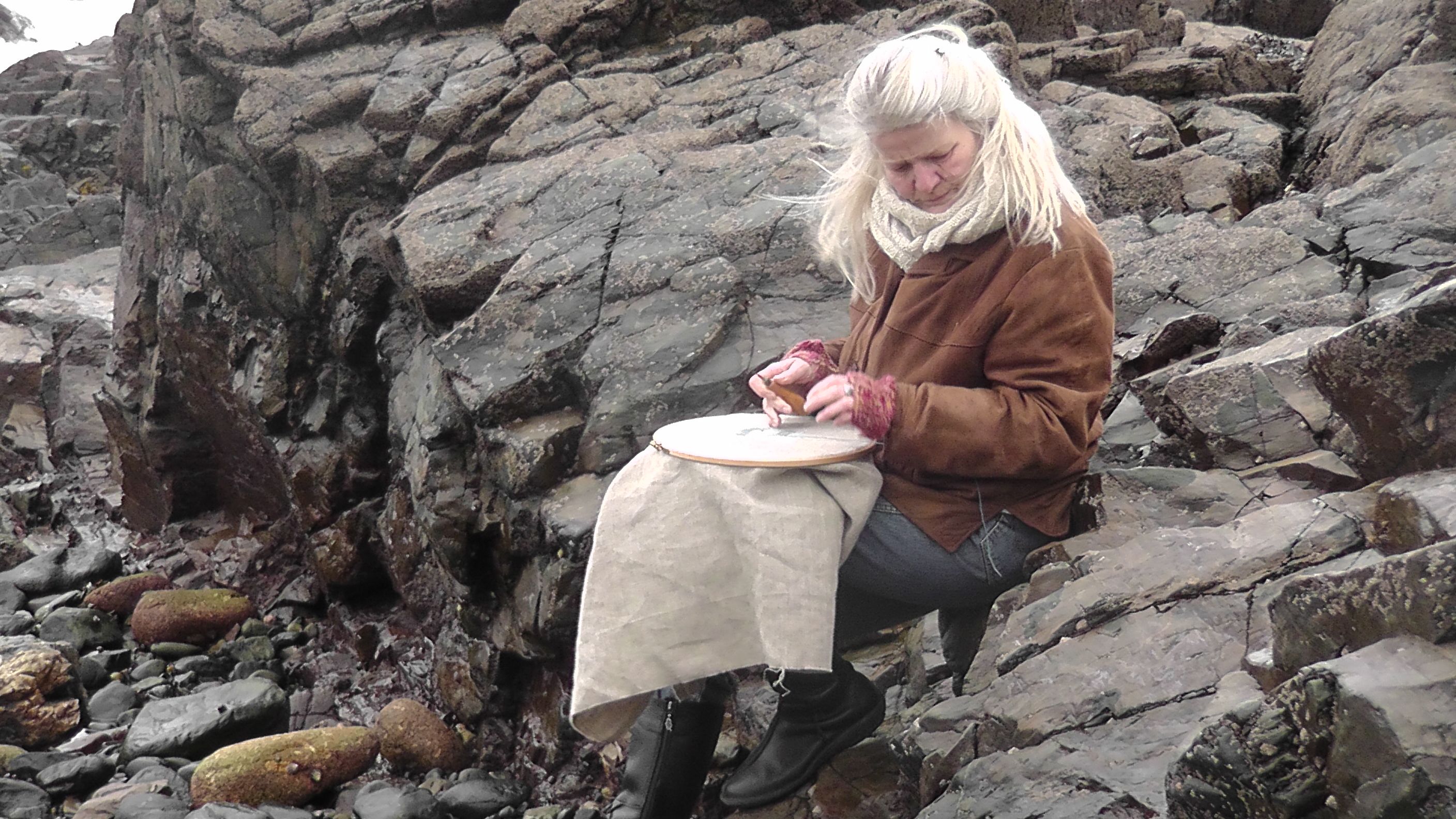
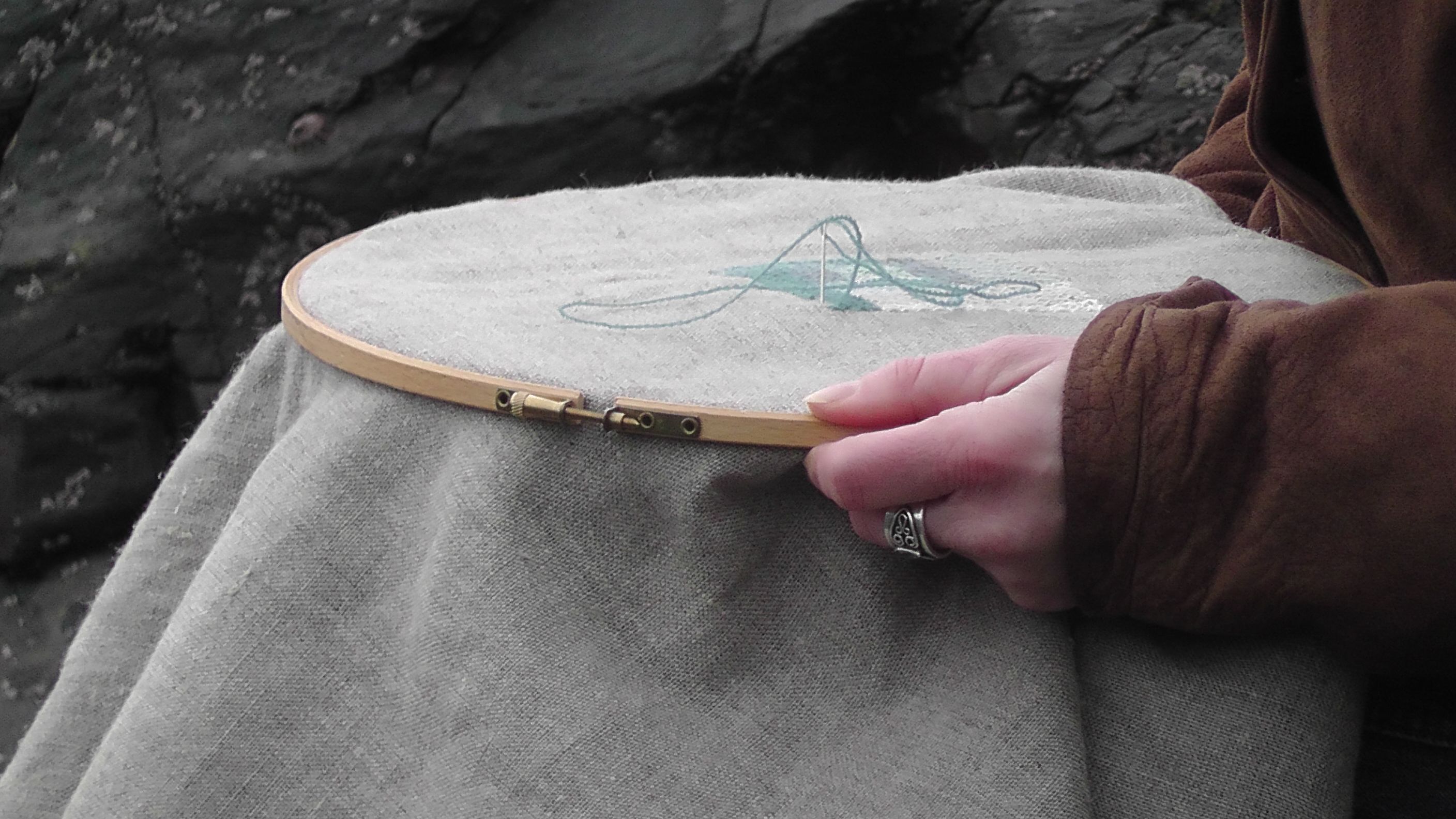

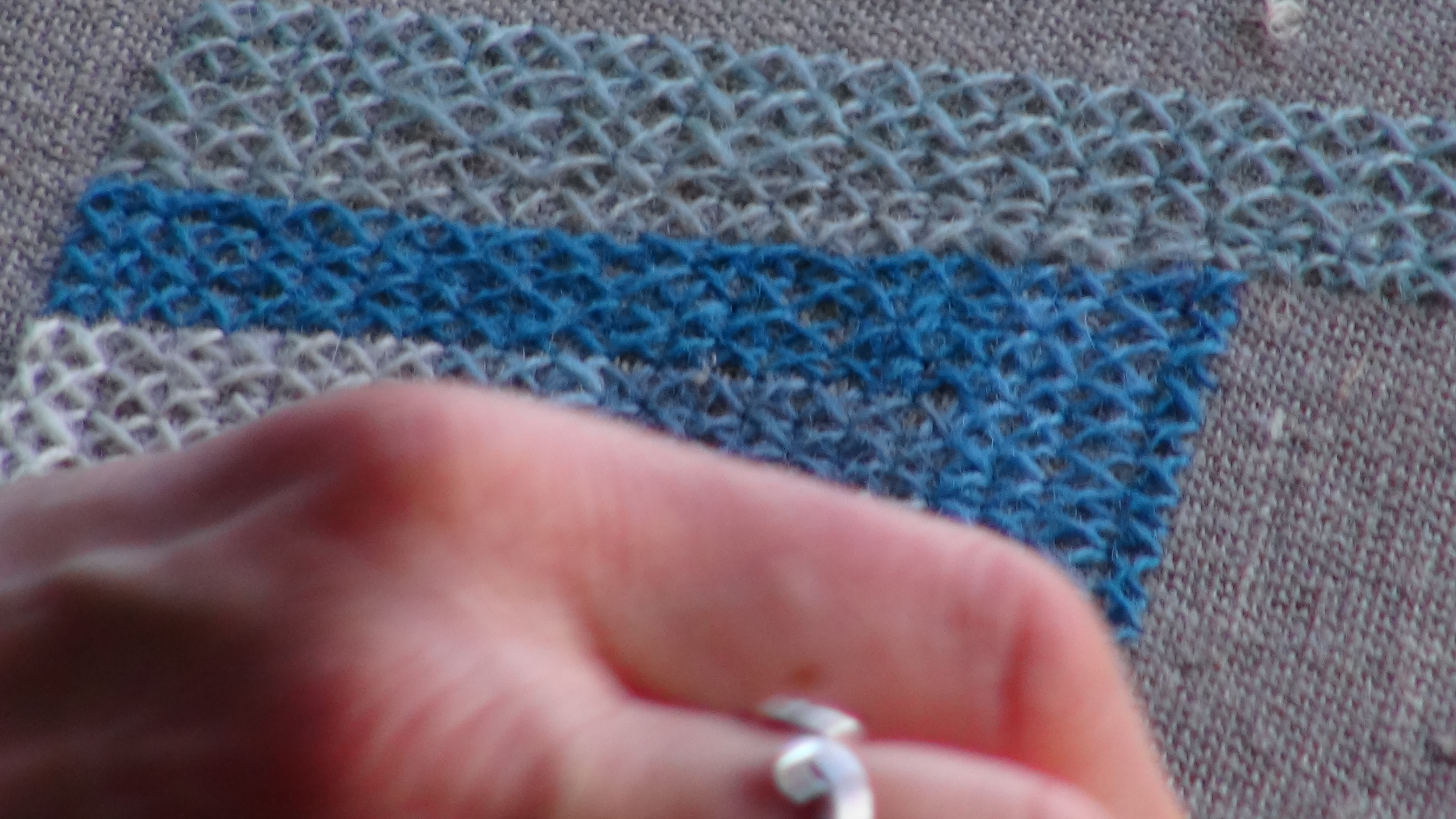
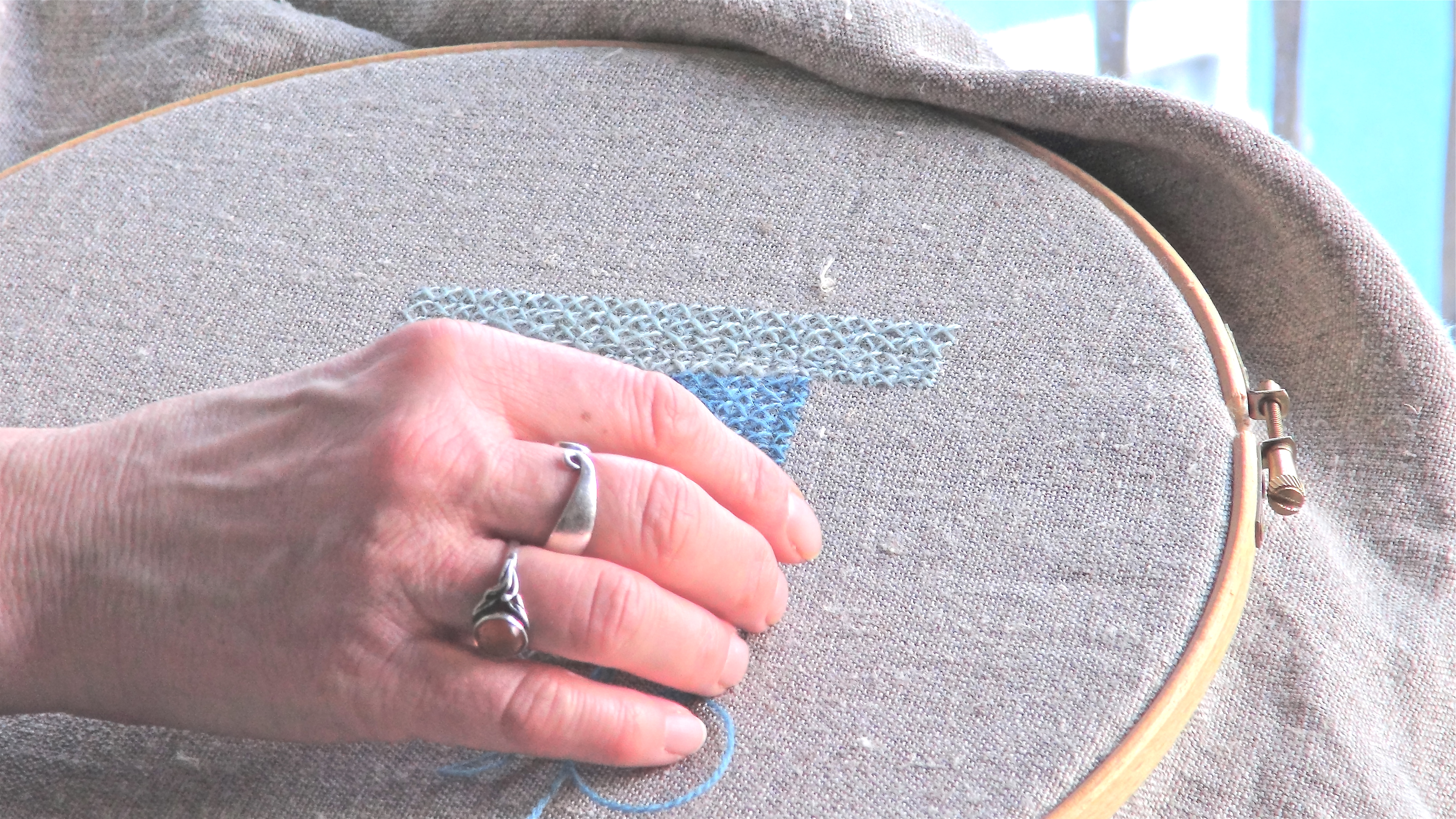

These images document the journey I have been on with my exploration of Stitch, Time, Place and Music since September 2012.
I have been in different places, at Home, in the Church, at my partners flat and outside on the beach. It is a slow journey, learning steps on the way, beginning to see and understand what I am looking for. Also learning how to use media as video and photography as tools of documentation of the activity Stitch. Every taking of a new piece of footage and in the process dealing with it in a way to make it accessible through media and social media is part of an interesting, sometimes trying and challenging learning curve.
And time and time again questioning and reminding myself :” What is the work??” and feeling that the boundaries becoming blurred, as new aspect are emerging. The beginning collaboration with music / musician is a new thought, not only seeing the music as an underpinning audio wallpaper: in my mind the music becomes a dialog partner .


Moving on……….
Tuesday, 22. January 2013
While I was working around the visual idea of embroidering in the church against the window with the music of Avro Präet, it felt safe, like a know territory in which to work.
In my conversation with Gillian Wylde last week it became clear, that the process of the embroidery and the internal process is the work: it is an exploration of seeking moments of calm and reflection in an almost meditative activity, being in a space, inside or outside reflecting the connection to the world, being in the world while being within myself, with myself, enduring myself.
I feel her suggestion of just going out there, and being in a space, with my embroidery, just being and noticing…feels right and scary, uncertain… I am glad to be left to explore this journey.
The Idea, the image to take this exploration on a Journey feels right; my wish was always to go with my Gyspy Spirit, work I can put in bag and go and work, where ever I am, I always longed for this kind of freedom. I would like to have somewhere a small base in an Artist Community; I also had the wish to travel and let the travel be part of my work. The Embroidered Cloth becomes the real time documentation, the photos and films the documentation, where I can share the experience with others.
I might feel into the idea of working in a busy crowded space, as a contrast as a visual expression of the Monkey Mind (more familiar to me then I wish for!).
On Music
Still I feel strongly that music and sound is an integral part of the expression of the internal process; it is also the part where I wish to reach out to other people and seek collaboration. In my search I am looking now into more experimental and/or improvised music; Jamie Mills is a wonderful source for inspiration and hopefully collaboration.
There is still this thing about that a lot of environmental art/ landscape art is very male; being out there, claiming territory.
For me it is looking also inside, the house, the nest, the home, and the space we share, like churches, cafes, and trains.
And at the same time it was very exhilarating when I was sitting on the rocks near Mousehole, in the wind and cold, listening to the crashing waves and the screeching seagulls.
Thought on Sustainability as an integral part of my practice
This year it will be 11 years since I started my journey towards a Degree in Fine Art; I started off with an A level in Textiles, followed by an A level in Fine Art and an Foundation Degree in Design and Art.
In my attic there are several boxes with sketchbook, notebooks, folders with drawings, sketches, A1 boards with course work; under my bed the handmade A 1folder with the prints of my final work from the Foundation Degree.
I stopped working with screen print because I just could not comprehend the discrepancy between my private attempts in reducing plastic waste (I try to avoid plastic or/recycle as much as I can at home) and washing acrylic paint down the drain.
I just don’t want to accumulate any more any trail pieces, explorations in wasting material.
Using wool, produced by an British Company (Appleton) and fabric made of hemp (unbleached hemp fabric from Turkey thorough The House of Hemp), which is in its farming and production more sustainable then cotton I finally have with this very conscious decision at a material, where I can feel at ease with.
The chosen material also fulfills a sense of calm aesthetic, which I had found in books about Japanese craft, Zen design and Shaker Design.
I wish to amalgate the exploration and documentation of the process and activity of very simple hand stitching with using one continuous piece of work, which actually consists of 3 different sized pieces of cloth, onto I embroider with a simple cross stitch using design borrowed from traditional quilting pattern.
In a further step I would like to incorporate the working of several women together on one piece of cloth. This is to incorporate the communal aspect in my work.
The intend and conscious choice of using a quilting pattern is to link my work with the long standing history of woman and needlework, particular the tradition of the American Quilting Bees (groups of women who come together to work on one quilt).
Recently I watched the film “The Making of an American Quilt”; (incorporate some info about the film) : besides the narrative of the film it gave a glimpse it the emotional aspects of working on a quilt for the women in this group.
Textile related activities have two aspects for me


My practice shows me very directly what I am exploring. As I am documenting my activities through video, photography and explore the link with music I spend time with cameras, video cameras and my laptop.
And very directly I experience how my sense of time alters when involved with technology.: time seems to lapse and leaves me empty and drained. My sense of communication appears to be almost damaged. Also I do achieve to create my wanted documentation, it is an
often frustrating process, when I forget steps in a process and can’t remember how I did something.
The opposite is the experience when I stitch or knit without documenting it as a parallel process. Then yes , time appears long and flowing with spaces to breathe and I can settle in a feeling of calm.
After some time there is then a gentle comforting feeling, of feeling grounded and content.
My practice shows me my longing. I yearn for the feeling of time I had as child, when an hour felt ever so long.

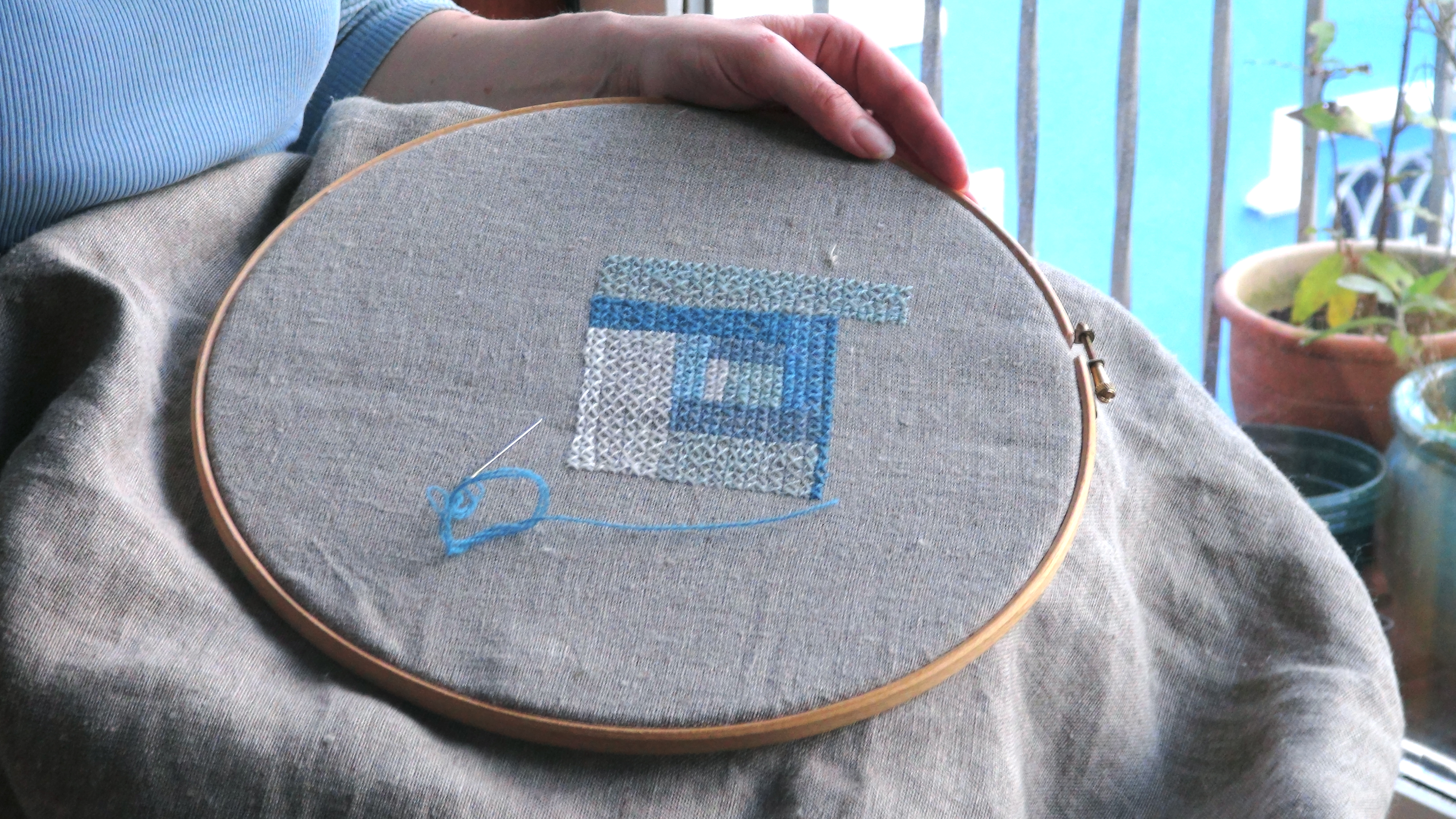
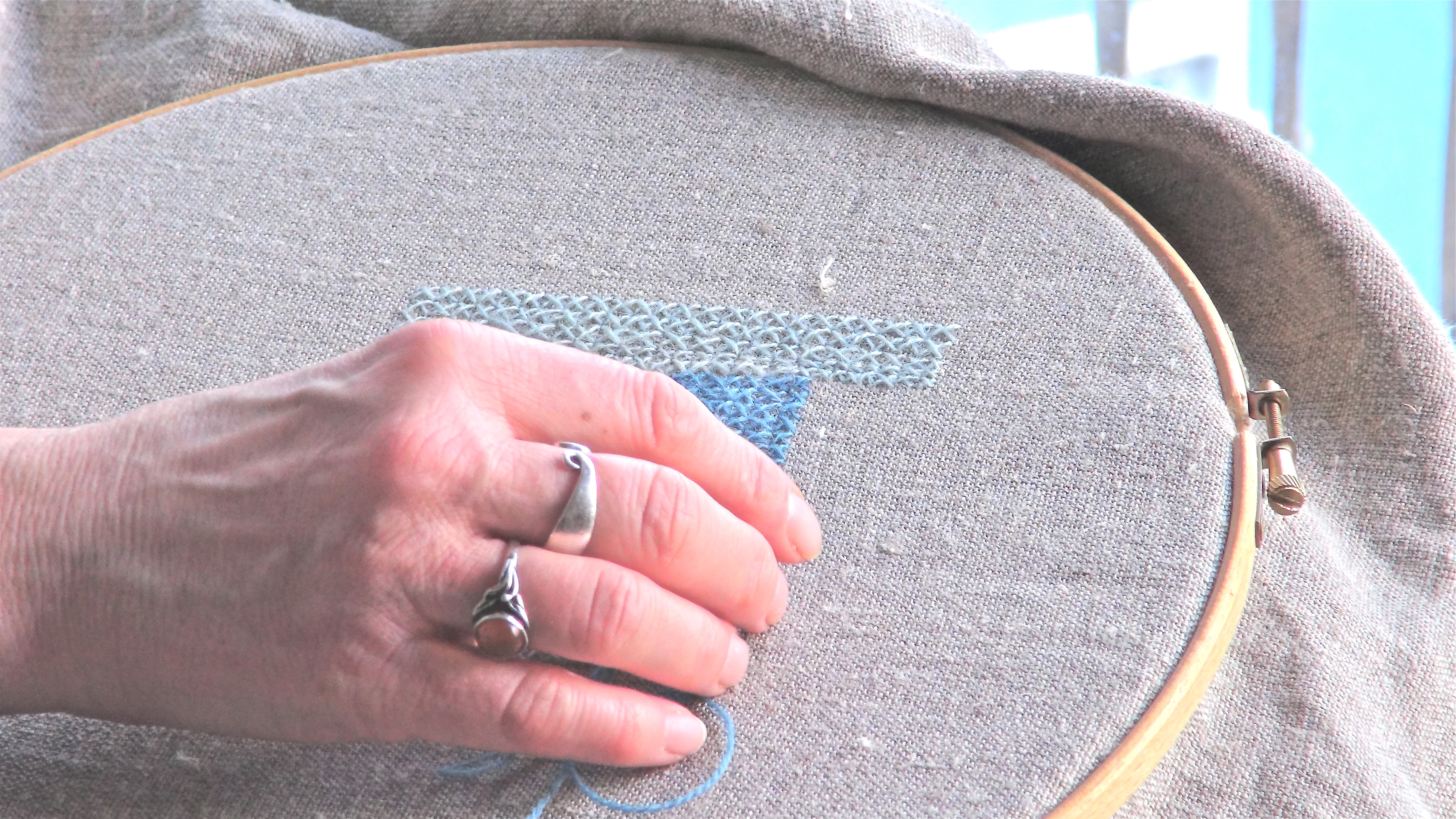


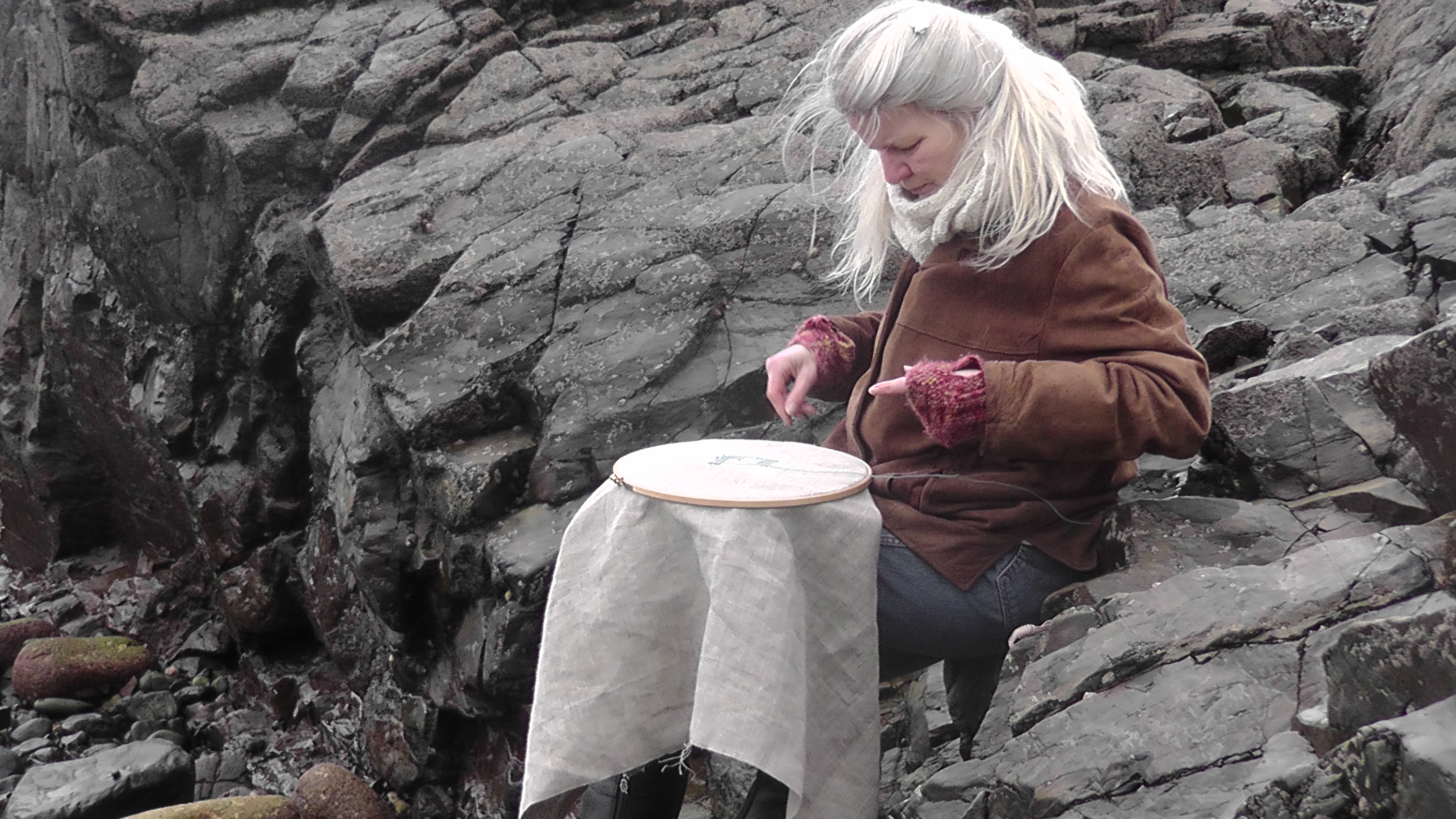
Talk with Bill, Thursday, 17.01.2013
I talked with Bill about the tutorial with Gillian yesterday; the base line is to move on and take the activity “Stitching” on a journey.
It means leaving the church behind for the time being.
I might want to film in some of the small country churches; the spiritual environment, the quiet and the time factor,
particularly here in the South-West of Cornwall echoes with search of a point- place-moment-sequence meets in the stillness that is interwoven with a place and its sounds.
It means going outside, on beaches, rocks, moors. Gillian suggested going out for a day on a journey, for example Dartmoor, spend time stitching and later on writing about the experience.
Also it became very clear, that the video and stills act as documentation and are not the work itself.
The Work is the activity, the act of being in a place while finding the place inside, through a moving activity, the Stitching.
The Stitching becomes a “real” time documentation, tangible memory of the time spend. Each stitch holds the memory of a moment, a breath.
So much comes together for me in this work;
⇒⇒ my search and longing for beauty (reference Satish Kumar on Beauty),
⇒⇒ my love for the handmade activity, ⇒⇒ my search in using material which are kind to the environment. (Here hemp and British Wool)
⇒⇒ working with music and sound
In talking with Bill it became clearer what I am looking for:
> in the visuals > Images in the landscape, working in the landscape
> in the sound > ambient sound of the filming
> under laying with sound from close up recordings of stitching, needle through the fabric, breathing, moving of cloth.
Also I became aware that I could only think of one “mode” at a time, which is interesting in itself.
Gillian suggests “Contrast” work as in a setting of stitching at Piccadilly Circus.
First I rejected her idea, as something I was not looking for; in the conversation with Bill,
I thought, it would be interesting to explore the idea, with the freedom to abandon it, if it doesn’t feel right.
At the moment I am concentrating on the “Calm” mode.
Working with sound and music is an integral part, as music is such a powerful tool for expression of moods and feeling and plays an important part in my life.

living in the moment, breathing into the presents and making to feel alive
Fibre Art, Eco Printing, Natural Dyeing, Book Arts
A Journal of Observations
wherever the spinning takes me
Ceramic Artist and Potter
The Multi-Award Winning Knitting, Comedy and Yarn Podcast
CELEBRATING THE BEAUTY OF SUNSHINE COAST MUSHROOMS
Finding the beautiful in the everyday
adventures in learning to sew
Songs with a smile and a heart
 One Stitch at Time